Application · Coatings & agriculture
Anti-fog and anti-condensation coatings
Fog is millions of tiny water droplets that scatter light. A coating made with colloidal silica or alumina sol is so hydrophilic that condensing water cannot form droplets. It spreads into a thin, clear film instead. The surface stays transparent and water runs off rather than dripping.
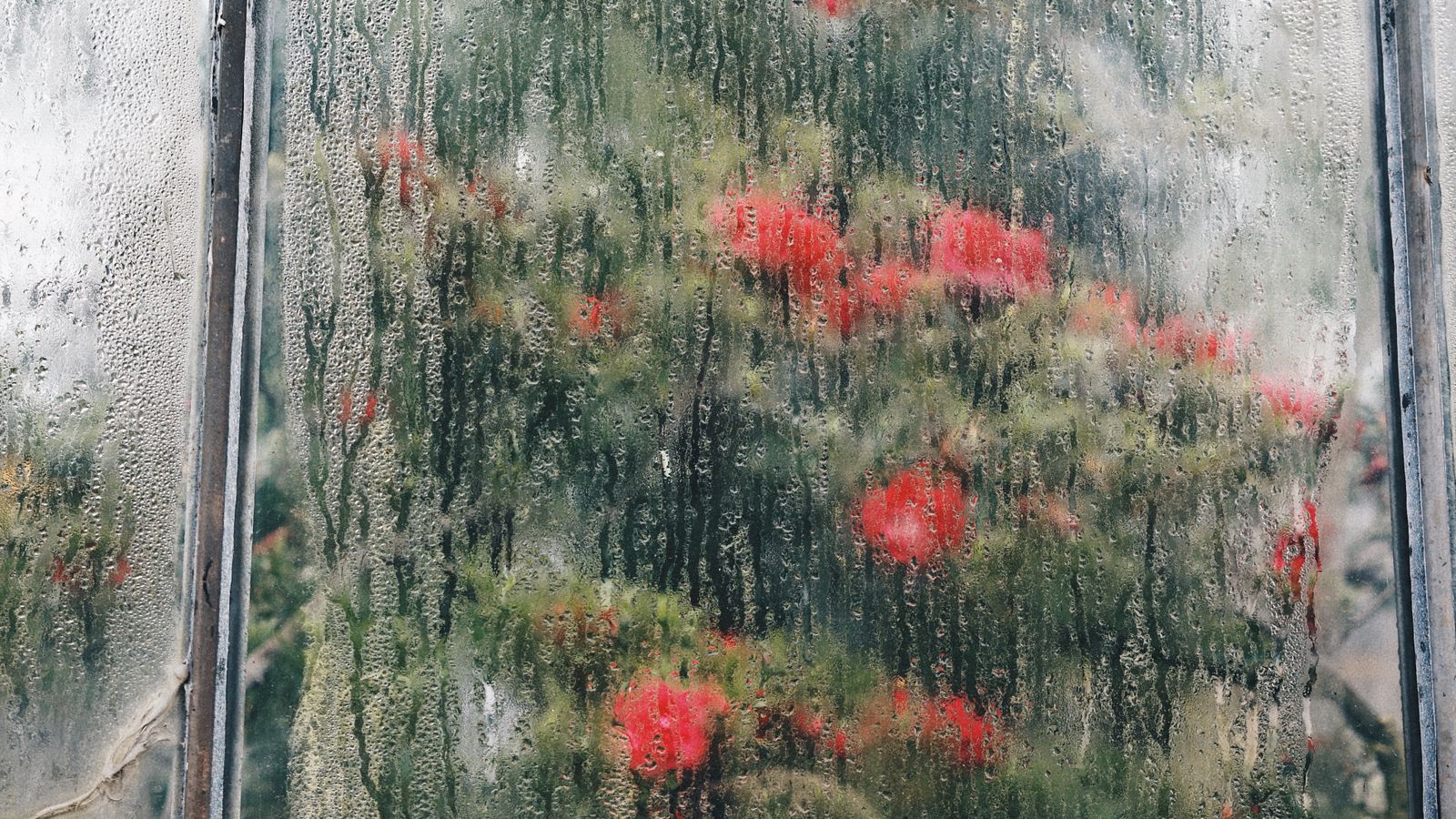
Why inorganic sols prevent fog
- Very high surface energy. The surface of a silica or alumina particle is covered in hydroxyl groups that attract water strongly. On such a surface, water spreads out instead of beading up.
- Very large surface area. A dried sol coating is a network of nanoparticles with a large total surface. Moisture is taken up and spread across the whole area instead of collecting at single points.
- A continuous water film instead of droplets. The water layer is smooth and transparent, so light passes through it with little loss. On sloped surfaces it drains away instead of forming drops that fall.
Where it is used
| Application | What the coating prevents |
|---|---|
| Greenhouse and agricultural films (anti-drip) | Droplets that block sunlight and drip onto crops, where they spread disease |
| Food packaging films and lids | Fogging that hides the product on the shelf |
| Mirrors, glass, visors and goggles | Loss of visibility in humid or changing temperatures |
| Interior building surfaces, cold-water pipes and equipment | Condensation, dripping and the mould that follows |
Choosing the sol
| Product | Particle charge | Typical role |
|---|---|---|
| CH83-120C colloidal silica (4–5 nm) | Negative | The smallest particles give the clearest film; first choice where transparency matters |
| CH83-120 / CH83-125 (8–10 nm) | Negative | General anti-fog and anti-condensation coatings |
| GHAL alumina sol | Positive | Used alone or with silica; for cationic formulations and film surfaces |
Commercial anti-fog coatings usually combine an inorganic sol with a hydrophilic polymer or surfactant, and with a binder that anchors the coating to the film or glass.
Formulation notes
- Durability is the main challenge. The coating is constantly wetted, so a poorly anchored layer washes off. Published data on agricultural films show anti-fog life ranging from about one month for early coatings to between six months and a year for better-designed systems. The binder and surface preparation decide which end of that range you reach.
- Film surface energy. Polyolefin films (PE, PP) usually need corona treatment or a primer before a water-based sol coating will wet and adhere.
- Charge compatibility. Do not mix negatively charged colloidal silica with cationic additives unless the system is designed for it. See the stability guide.
Frequently asked questions
How does colloidal silica stop fogging?
It makes the surface strongly hydrophilic and gives it a very large surface area. Condensing water spreads into a thin, transparent film instead of forming light-scattering droplets.
What is an anti-drip coating on greenhouse film?
It is an anti-fog coating on the inside of the film. Condensation runs down the film as a sheet instead of forming drops that block light and fall onto the crop.
How long does an anti-fog coating last?
That depends mainly on the binder and on how well the coating is anchored to the substrate. Published figures for agricultural films range from about a month to around a year.
Should I use colloidal silica or alumina sol?
Colloidal silica is the usual base. CH83-120C gives the clearest film. Alumina sol is positively charged and suits cationic formulations; it is also used together with silica.
Need the full TDS or a trial sample?
Tell us your application and target spec. Our technical team replies within one working day.