Concrete floor hardener and densifier
A concrete floor wears from the top. The surface dusts, scuffs and soaks up spills. A lithium silicate densifier soaks into the slab and reacts with it chemically, so the top layer of the concrete itself becomes harder and denser. It works on new floors and on old ones.
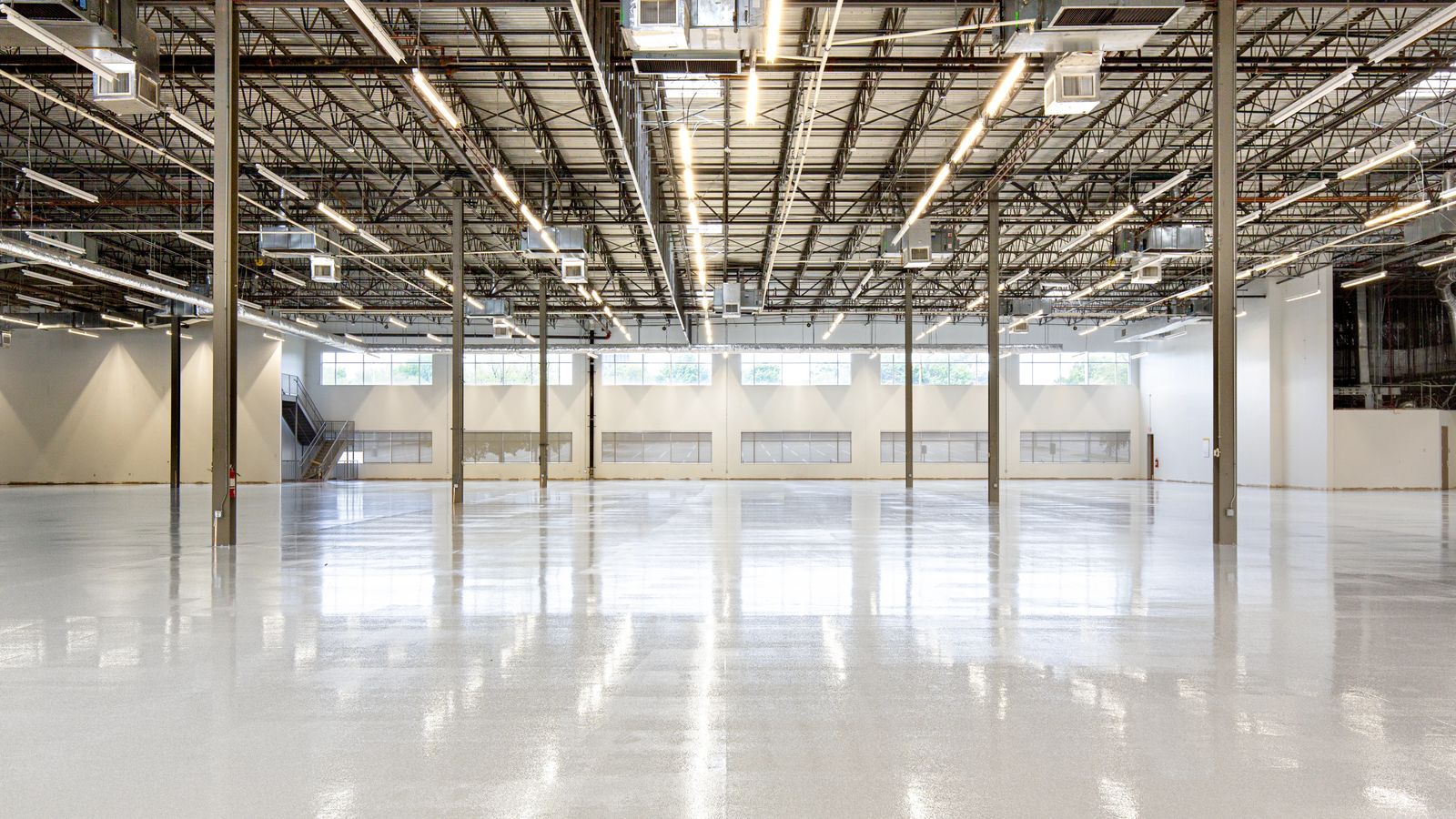
How a silicate densifier works
As cement hydrates, it leaves calcium hydroxide (free lime) in the pores of the concrete. This lime adds no strength and is the main source of surface dusting. A silicate densifier penetrates the capillary pores and reacts with the free lime to form calcium silicate hydrate (C-S-H), the same binding phase that gives concrete its strength. The pores fill from the inside, and the surface layer becomes one hard, dense body with the slab. It is not a coating that sits on top and can peel off.
What it improves
- Surface hardness and abrasion resistance: less wear from forklifts and foot traffic;
- No more dusting: free lime no longer works loose from the surface;
- Lower porosity: water, oil and spills penetrate less, so the floor is easier to clean;
- A better base for polishing: densified concrete takes a higher, longer-lasting gloss when ground and polished.
It is used on new floors, once the slab has cured enough, and on existing floors that have started to dust or wear. Typical sites are warehouses, factories, car parks, logistics centres, retail and commercial spaces.
Our products
| Product | Basis | Use |
|---|---|---|
| GH8080 concrete hardener | Inorganic silicate | A ready-made penetrating hardener and densifier for concrete floors |
| GHSL lithium silicate | Lithium silicate, modulus 2.5–4.8 | Raw material for formulators who make their own densifier |
| Potassium silicate | Potassium silicate | An alternative or blending silicate for floor hardeners |
- GH8080 appearance
- Colourless, odourless, transparent to slightly turbid liquid
- pH
- ≈ 11
- Dilution
- Miscible with water in any proportion
- Packaging
- 25 kg / 140 kg drums, or to order
- Storage
- 5–35 °C, ventilated, out of direct sunlight; shelf life 6 months
- Classification
- Non-hazardous for transport, non-flammable; SDS available
Lithium, potassium or sodium silicate?
Floor densifiers are made from sodium, potassium or lithium silicate. Lithium silicate is the most widely chosen for finished floors. It reacts cleanly in the surface layer and leaves little residue, and it has the lowest tendency to efflorescence, the white bloom that sodium silicate can leave behind. Potassium silicate sits between the two and is also used, alone or blended.
Application notes
- The concrete must be clean, sound and free of curing compounds, sealers, oil and laitance so that the product can penetrate.
- Apply evenly, and keep the surface wet with product long enough for it to soak in.
- Remove any excess before it dries on the surface. Dried excess can leave a white residue.
- On polished floors, the densifier is usually applied between grinding and polishing steps.
Coverage depends on the slab: porosity, age, finish and any earlier treatment all change how much hardener a floor will take. Tell us about your floor and we will recommend a rate. Always test a small area first, especially on old floors with unknown treatments.
Frequently asked questions
What does a lithium silicate concrete densifier do?
Can it be used on old concrete floors?
Is a densifier the same as a floor coating?
Lithium, potassium or sodium silicate — which is best for floors?
Need the full TDS or a trial sample?
Tell us your application and target spec. Our technical team replies within one working day.