GHSL-Ⅰ · GHSL-40 · GHSL-R · GHSL-Ⅲ
Lithium silicate
Lithium silicate solution (Li₂O·mSiO₂·nH₂O) is a self-curing inorganic binder. As it dries it reacts to form a film that is insoluble in water. It is used in inorganic zinc-rich primers, mineral coatings and high-temperature bonding. The modulus can be made to order anywhere from 2.5 to 4.8.
Grades
| Grade | Type | Appearance | Main use |
|---|---|---|---|
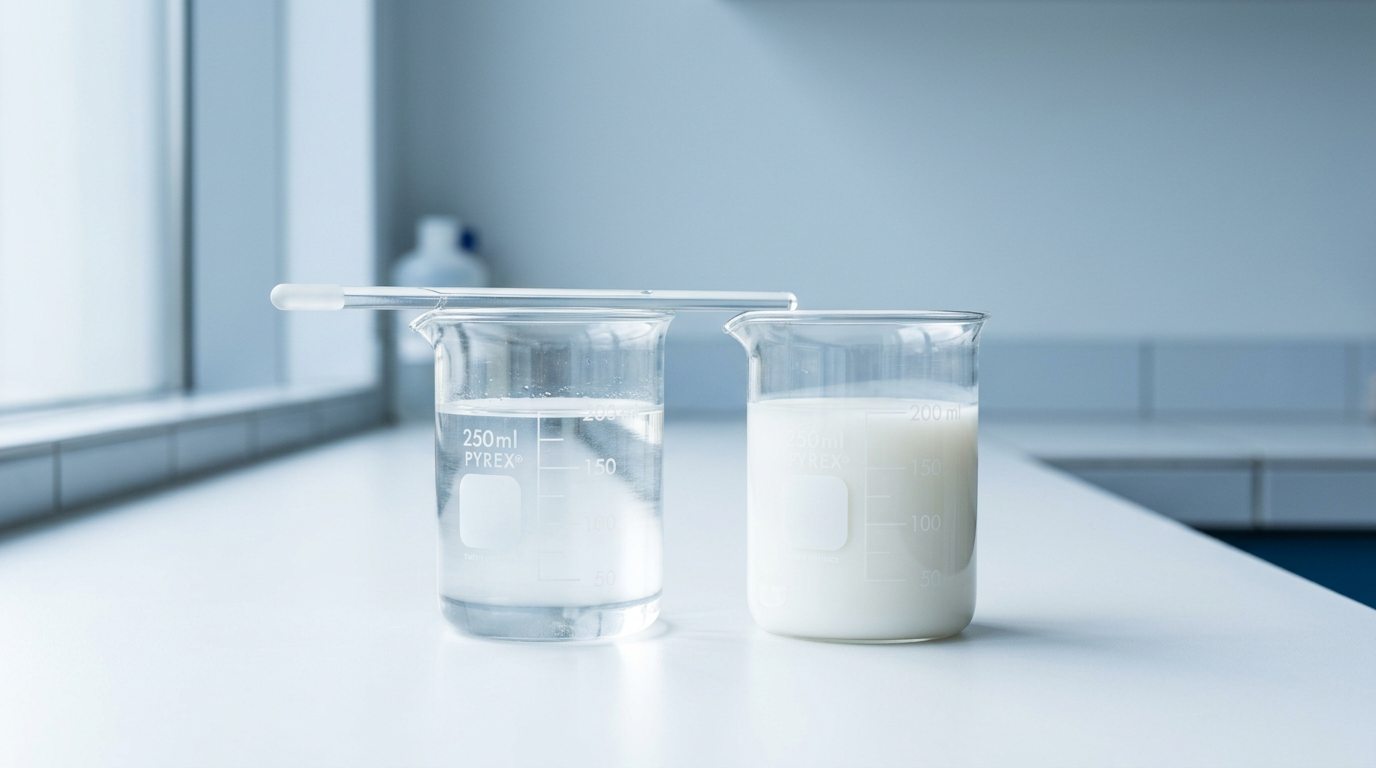
| GHSL-Ⅰ / GHSL-40 | Lithium silicate solution (about 23% solids) | Transparent or slightly hazy, translucent liquid | Inorganic zinc-rich primer, mineral coatings, high-temperature binder |
| GHSL-R | Emulsion-type lithium silicate | Milky white liquid | Organic–inorganic coatings |
| GHSL-Ⅲ | Modified lithium silicate | Colourless, odourless, transparent to translucent hazy liquid | Two-component water-borne inorganic zinc-rich primer; also used to strengthen cement floors |
GHSL / GHSL-R typical properties
| Composition | Li₂O·mSiO₂·nH₂O. The values of m and n depend on grade (modulus and concentration). |
|---|---|
| Modulus (M) | 2.5–4.8, made to order |
| pH | ≈ 11 |
| Relative density, 25 °C | 1.16–1.19, depending on grade |
| Viscosity, 25 °C | on request |
| Dilution | Can be diluted with water in any proportion |
| Shelf life | 6 months from the packing date, stored at 5–35 °C |
GHSL-Ⅲ: coating performance (manufacturer test data)
Measured on a primer made with GHSL-Ⅲ and 400-mesh zinc dust at 3 : 7.
| Property | Result | Property | Result |
|---|---|---|---|
| Salt spray resistance | 8000 h | Hardness | 6H |
| Damp heat resistance | 3000 h | Adhesion (circle method) | Grade 1 |
| Water resistance | 8000 h | Impact resistance | 55 cm |
| Flexibility | 1.2 mm | ||
| Heat resistance | 450 °C | Dry time, 25 °C | touch 8 min · hard 6 h |
- pH
- 11.5–12.5
- System
- Two-component. Allow 30 min induction after mixing; pot life 4 h
- Application
- Spray, brush or roller
- Starting ratio
- GHSL-Ⅲ : zinc dust (400 mesh) = 3 : 7 by weight
- VOC
- Water-borne inorganic binder, no VOC emission
- Shelf life
- 6 months, stored at 5–35 °C, ventilated, out of direct sunlight
Choosing between GHSL and GHSL-Ⅲ for zinc-rich primers →
Applications
- Self-curing inorganic zinc-rich primers. The zinc dust acts as a sacrificial anode and protects steel cathodically. Starting ratio: GHSL : zinc dust (400–500 mesh) = 3 : 7.
- Concrete floor hardening. Lithium silicate penetrates concrete and reacts with free lime to form calcium silicate hydrate. The floor becomes harder, stops dusting and absorbs less, on both new and existing slabs. See concrete floor hardeners.
- Mineral (inorganic) architectural coatings. Use alone or combined with colloidal silica.
- Modified coatings. After modification with organic emulsions, lithium silicate can be used in anti-corrosion and floor coatings for metal, concrete and plaster, and in line-marking paint for runways, highways and car parks.
- Binders. High-temperature bonding, PTFE-to-substrate adhesion, and a base for spray inks.
- Glass and cellulose. It reacts with surface hydroxyl groups to form a film; the reaction proceeds above 60 °C.
Starting formulations are guidance only and are not suitable for every application. Trial the product in your own system before production use.
Frequently asked questions
What does lithium silicate modulus mean?
Modulus (M) is the molar ratio of SiO₂ to Li₂O. A higher modulus gives faster curing and better water resistance, but the solution is less stable. We produce lithium silicate at moduli from 2.5 to 4.8 to suit your formulation.
Why use lithium silicate rather than potassium or sodium silicate?
Lithium silicate cures to a film that does not redissolve in water, and it is less prone to efflorescence than sodium silicate. That makes it the usual choice for self-curing water-borne zinc-rich primers and mineral coatings.
What is the difference between GHSL and GHSL-Ⅲ?
GHSL is a standard lithium silicate solution. GHSL-Ⅲ is a modified lithium silicate with better film formation, designed specifically as a two-component zinc-rich primer binder.
Is it dangerous goods for shipping?
GHSL products are non-hazardous for road, sea and air transport and are non-flammable. They are alkaline (pH about 11–12), so wear gloves and eye protection when handling. An SDS is available on request.
Need the full TDS or a trial sample?
Tell us your application and target spec. Our technical team replies within one working day.