Application · Coatings
Colloidal silica in waterborne wood coatings
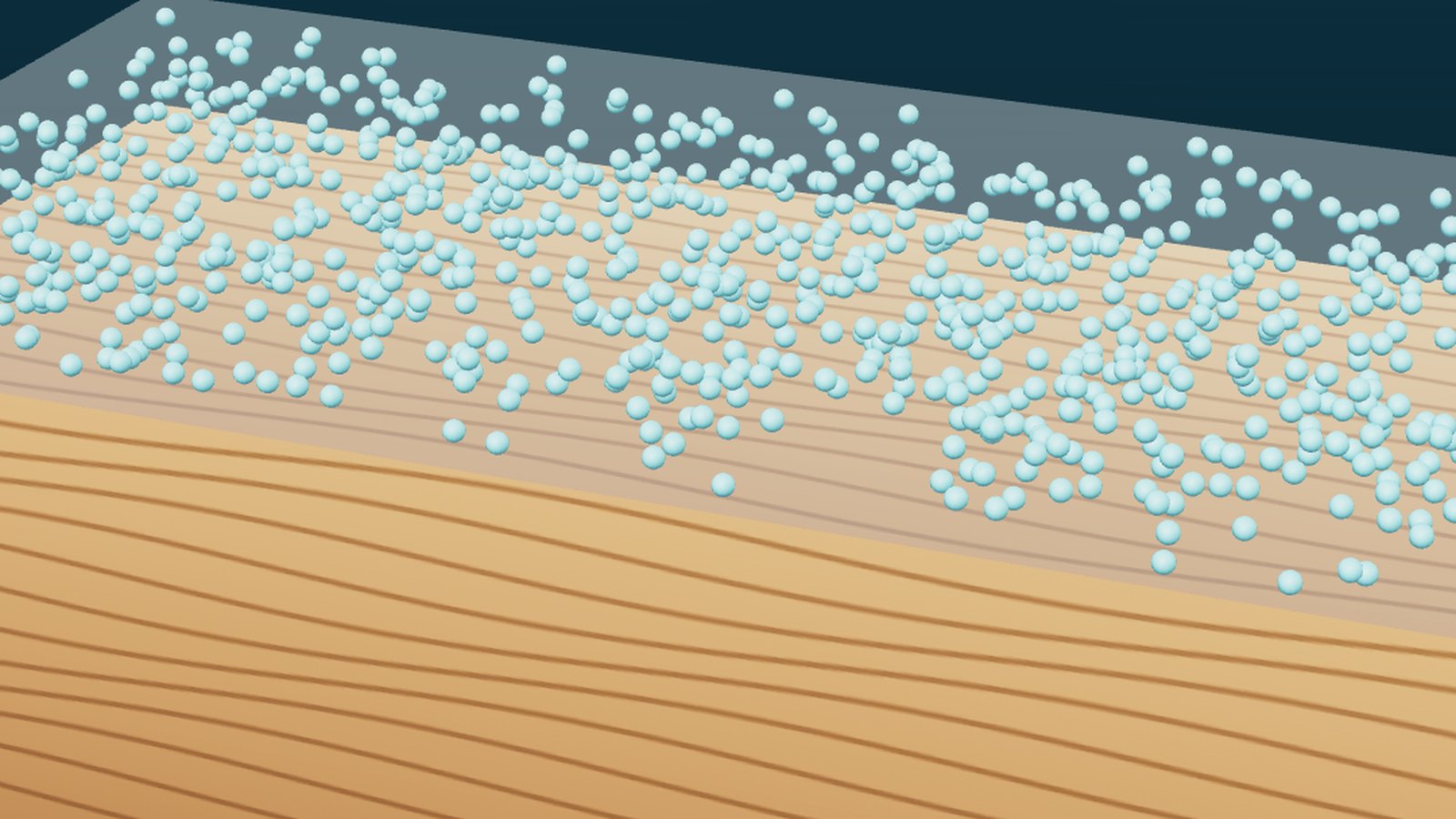
Waterborne wood coatings have two weak points: the wood itself, which pushes tannins and oils up into the finish, and the film, which dries softer than a solvent-borne one. Blending colloidal silica into the emulsion or waterborne resin puts nano-sized silica particles throughout the film. The film becomes denser and harder, in both sealers and topcoats.
The problem with waterborne finishes on solid wood
- Tannin bleed. Tannins are water-soluble. When a waterborne coating goes on, they move up with the water and discolour the finish: yellowing and blotches.
- Oil and resin bleed. Around knots in pine and in oily species such as teak, natural oils come through and interfere with drying and adhesion.
- A soft film. A dried emulsion film is softer than a solvent-borne one. It clogs sandpaper, and stacked parts stick together.
What colloidal silica adds
| Benefit | Why it happens |
|---|---|
| Sealing against tannin and oil bleed | The particles pack the film and close the paths tannins and oils use to migrate. Less of the substrate's colour and oil reaches the surface. |
| Hardness and sandability | A harder film sands to a dry powder instead of clogging the paper. Block resistance improves, so stacked parts do not stick. |
| Weathering and heat resistance | Inorganic silica is not degraded by UV or heat. A hot cup is less likely to leave a mark. |
| Less warping | Furniture that takes up water swells and warps. A denser surface keeps water out, so the wood stays in shape. |
Sealers and topcoats
Colloidal silica works in both layers. In a sealer or primer the priorities are blocking bleed and easy sanding. In a topcoat they are hardness, scratch resistance and weathering. It is always used together with an emulsion or waterborne resin, never as the binder on its own.
Formulation notes
- Charge compatibility. Colloidal silica particles are negatively charged. Pair them with anionic or non-ionic emulsions and resins. In a cationic system the silica will flocculate. See the stability guide.
- More is not better. Overloading makes the film brittle and can whiten it. Find the ratio with lab trials in your own binder.
- One-pack and two-pack systems behave differently. How much hardness and abrasion resistance you gain depends on how the silica is distributed and on how crosslinked the binder is.
- Very high-tannin woods such as oak and chestnut may need a dedicated stain-blocking formulation as well. Silica alone may not be enough.
Frequently asked questions
Why add colloidal silica to a waterborne wood coating?
It makes the film denser and harder. That helps block tannin and oil bleed, improves sanding and block resistance, adds weathering and heat resistance and keeps moisture out of the wood.
Can colloidal silica be used in both sealer and topcoat?
Yes. In sealers the focus is blocking bleed and sanding; in topcoats it is hardness, scratch resistance and weathering.
Is colloidal silica compatible with every waterborne resin?
No. The particles are negatively charged, so use anionic or non-ionic emulsions and resins. Cationic systems will flocculate it.
How much colloidal silica should I add?
It depends on the binder and the target properties. Too much makes the film brittle or white. Start with small lab batches; we can supply samples.
Need the full TDS or a trial sample?
Tell us your application and target spec. Our technical team replies within one working day.